Showing posts with label heart disease. Show all posts

Friday

Physical therapy for the prevention of heart disease

Physical therapy for the prevention of heart disease

 Physical therapy for the prevention of heart disease

Many heart disease, multiple causes, and these causes: smoking - and carefree - and anxiety - and nervous tension - and high blood pressure and other

1) To guard:
- Stay away from heavy meals
- Not a lot of salt in food
- Engage in sports and exercise appropriate


2)  Herbs used in treatment:
- Grapes
- Onions
- Apricot
- Pulses
- Dry
- Green tea
- Cabbage
- Tomatoes
- Pomegranate
- Cherry
- Celery


3) To strengthen the heart muscle:
- A spoonful of honey taken from time to time, and dissolved in a little boiling water where pomegranate peel, it supports and strengthens the heart too, as well as if taken from the royal jelly as three drops and the amount of sperm that it strengthens the heart.
- Sports and the best of the best treatments for heart disease and strengthen.


4)  For the treatment of myocardial inflammation and chills:
 - Drinking on an empty stomach daily cup of cold water local two spoons of honey, and continues until the end chills and it may not exceed the week, God willing.

5)  Pomegranate juice protects against heart disease:
- After that revealed a number of research the role of materials called «Vljevinuedat» on the body, and they act as oxidation strong inside the body, he began to search for these substances in food, was a series of research that confirms the existence of a number of plants and flowers, singled tea number of good research in this aspect.

8 Ways to Lower Your Heart Disease Risk


 8 Ways to Lower Your Heart Disease Risk

You can do a lot to lower your odds of getting heart disease. Taking action will improve your health and, possibly, save your life. Get going on these 8 ways to get on track.

1. Quit smoking. If you smoke, you are more than twice as likely to have a heart attack as nonsmokers, and you’re much more likely to die if you do have a heart attack.

2. Improve cholesterol levels. You're more likely to get heart disease if you have:
  • Total cholesterol level over 200
  • HDL ("good") cholesterol level under 40
  • LDL ("bad") cholesterol level over 160
  • Triglycerides over 150
Cholesterol isn't the only thing that matters. Your doctor will consider the big picture, including all your potential risks. To help lower cholesterol levels, eat a diet low in cholesterol, saturated fat, and refined sugars.


3. Control high blood pressure. More than 50 million people in the U.S. have hypertension, or high blood pressure, making it the most common heart disease risk factor. Exercise and healthy eating help. Some people may need medicine to control their blood pressure, too.

4. Get active. People who don't exercise are more likely to get heart disease, and die from it, than people who are active. Check with your doctor before starting a new exercise program, especially if you aren't active now. She can tell you what you can do.

5. Follow a heart-healthy diet. Eat foods that are low in fat and cholesterol. Just about everyone should eat more fruits, vegetables, whole grains, beans, nuts, legumes, and other plant-based foods. The fiber is good for your cholesterol, and you'll get vitamins the natural way, from foods.
You can still eat fish (especially salmon or tuna, which are high in good-for-you omega-3 fatty acids), poultry, and meat, but make it lean and keep the portions modest. Also limit salt and sugar. Most people get too much of both.


6. Get to a healthy weight. Losing extra weight is good for your heart. It can also help you lower high blood pressure and manage diabetes.

7. Control diabetes.Diabetes makes heart disease more likely. Many people who have diabetes don't know it. Get tested and get treated.

8. Manage stress and anger. Everyone has stress, and it's normal to get angry now and then. When stress and anger flare up, especially if it happens a lot, that's a problem. Managing your stress and handling your anger in healthy ways puts you back in charge.

5 foods to protect his heart

5 foods to protect his heart

5 foods to protect his heart

Cardiovascular disease is the leading cause of death worldwide. The body suffers daily attacks that exhaust the cardiovascular system. Here are 5 foods that help protect the heart.

1- Several studies show that cliniques1 phytosterol content of almonds at a rate of 34 mg to 30 g or 25 almonds, reduces the concentration of "bad" cholesterol (LDL) in the body. High cholesterol can lead to heart disease as the "bad" cholesterol, having supplied the bodies deposited in the arteries and, in case of surplus, risk butcher. According épidémiologiques2 data, a daily consumption of 30 g almonds reduce the risk of cardiovascular disease by 45%. Vitamin E contained in the kernel (7.5 mg of vitamin E for 25 almonds or half of the recommended daily intake for vitamin E) also help fight against heart disease by preventing the formation of blood clots.


2- Thanks to its content of anthocyanins (350 to 400 mg per 100 g of fruit), cherry part of the antioxidant fruits. Anthocyanins are phenolic compounds which act as pigments and give cherry red color. They also have the ability to neutralize free radicals, compounds that damage cells in the body that are responsible for atherosclerosis that is to say, the presence of a plaque on the wall of the arteries that hinders or blocks the flow of blood and can cause eventual cardiovascular disorders.


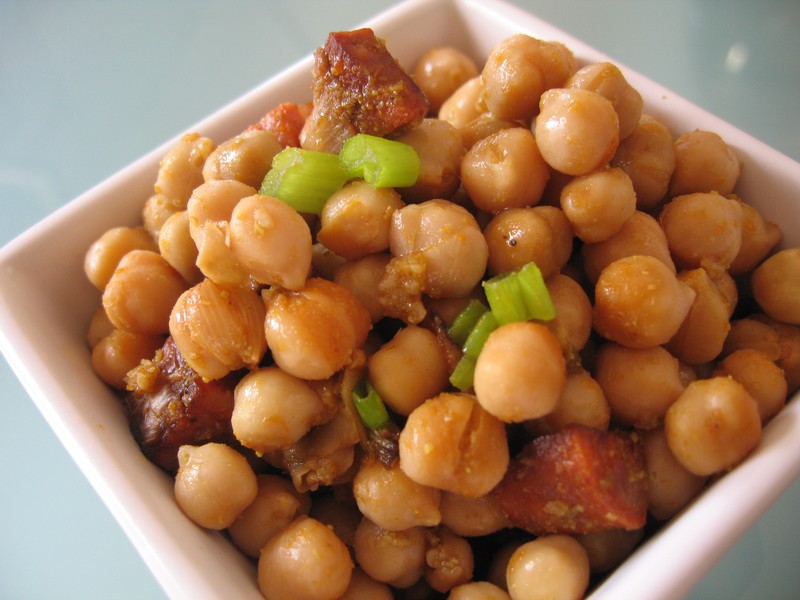
3- In addition to promoting satiety and to be low in calories with 163 kcal per 100 g, chickpeas would be a good ally for people with diabetes1. This would increase by 2 to 4 times the risk of suffering from cardiovascular disease. Chickpea has a low glycemic load is a calculation method taking into account the amount of carbohydrates, but also their quality. A blood glucose (= sugar in the blood) too high increases the risk of heart attack or stroke by clogging the blood vessels. Chickpeas have antioxidant properties due to their content of manganese and copper, nutrients that help reduce the effects of free radicals in the oxidation process of the body's cells.


4- 100g pork contains 3.6 grams of fat, including 1.2 grams of saturated fat, 1.4g of monounsaturated fats and 0.3 g of polyunsaturated fat. The levels of essential fatty acids (omega-3) pork so make it a meat to the most important nutritional qualities as those of beef or mutton. Pork consumption helps fight against excess "bad" cholesterol in the body by increasing lipid levels that remove the cholesterol deposited on artery walls and remove . An excess of "bad" cholesterol can lead cardiovascular disorders. With only 162 kcal per 100 g, pork is also low in calories compared to beef (252 kcal per 100 g of beef) or chicken (173 kcal per 100 g of chicken). 


5- The omega-3 content of mackerel makes him a true ally for cardiovascular health. With 1.2 g of omega-3 long-chain (EPA and DHA) for a 100g serving, mackerel, provides the body more than 2 times the intake of EPA and DHA per day recommended by the World Health Organization (WHO). Several studies have shown that consumption of omega-3 fatty acids reduces the risk of suffering from cardiovascular diseases. These fatty acids, acting on the elasticity of blood vessels, blood pressure and have anti-inflammatory properties help fight against the formation of blood clots. Mackerel has antioxidant properties because it is rich in selenium. This mineral prevents the formation of free radicals in the body. Excess free radicals contributes to the development of cardiovascular disease because they deteriorate including red blood cells.
Treatment of coronary heart disease

Treatment of coronary heart disease

Treatment of coronary heart disease


 There is no cure for coronary artery disease, but many treatments,
as medication, surgery and changing
lifestyle can slow its progression.
Among the drugs used in the treatment of coronary disease, it
include: antiplatelet agents, ACE inhibitors, beta-blockers,
calcium channel blockers, nitrates (nitroglycerin) (see the chapter titled "How
get the most from your medicines ").
Your doctor may also suggest the following interventions: intervention
Percutaneous coronary (PCI or angioplasty with stent) or surgery
CABG.


Anatomy of the heart

Anatomy of the heart

Anatomy of the heart

A normal heart is a powerful muscle pump. It can weigh between 200 and 425 grams (7-15 ounces) and its size is a little larger than your fist. Over a lifetime, the human heart will beat more than 2.5 billion times. Every day, an average heart beats about 100,000 times and pumps about 7,200 liters (1,900 gallons) of blood.

Your heart is located between your lungs in the middle of your chest, behind the breastbone, slightly left. A double membrane called the pericardium surrounds the heart like an envelope. Blood carrying oxygen reaches the lungs and into the heart. To function, the heart has to supply oxygen and nutrients it receives blood that is pumped in his coronary arteries.


Role

The circulatory system is comprised of the heart and the cardiovascular system. The heart pumps blood to the organs, tissues and cells in the body, delivering oxygen and nutrients to every cell of the body and remove carbon dioxide and waste products from the cells. Oxygen-rich blood is carried from the heart to the rest of the body through a complex network of arteries, arterioles and capillaries. The oxygen-poor blood returns to the heart through the veins.
http://www.fmcoeur.com/atf/cf/%7B3CB49E24-0FB7-4CEE-9404-67F4CEE1CBC0%7D/heart_in_fr_web.jpg
How does the heart work ?
The heart is a pump made up of four chambers. The upper chambers are called right atrium and left atrium. The lower chambers are called the right ventricle and left ventricle. A muscular wall called the septum separates the right and left atria and right and left ventricles.The left ventricle, the largest and most powerful of the chambers of the heart is able to pump blood throughout the body through the aortic valve.The two cavities of the right heart (right atrium and right ventricle) pump blood from the heart to the lungs so that blood cells can collect fresh oxygen in exchange of waste they collected during their visit in the body. The oxygen-rich blood returns to the left chambers of the heart (atrium and left ventricle), which then pump the rest of the body.When the heart muscle contracts, the two upper chambers (the atria) fill with blood. Then, these two chambers contract and expel blood into the ventricles. The ventricles then contract and push the blood out of the heart, or to the lungs or elsewhere in the body.
What happens during a heart beat?


In a normal heart, the electrical impulse that triggers the beat begins in a group of cells called the sinus node (or SA node) in the right atrium. The sinus node is often called heart rate regulator. It plays a role similar to that engine spark plugs of a car by producing the electrical signal that makes the heart pump. The sinus node generates a number of signals every minute, according to the needs of the organization. The resting heart rate is usually between 60 and 80 beats per minute.After an electrical pulse is produced, it spreads through the upper part of the heart (the atria), a bit like the ripples created by a stone thrown into a pond. This signal causes contraction of the upper chambers (atria). In contracting, they expel the blood contained therein to the lower chambers of the heart, the ventricles.Meanwhile, the electrical impulse that made the atria contract has now reached the atrioventricular node (AV node or) located in the lower part of the right atrium. The AV node is the electrical connection between the atria and the ventricles. It retains the electrical impulse for a while, a bit like a relay, so that blood can be pumped from the atria into the ventricles. Then, it sends the signal to the lower chambers of the heart, which in turn contract. The contraction of the ventricles pushes blood with great force. The electrical impulse has now passed through the upper and lower chambers of the heart and made them shrink. It's a heartbeat. This electrical activity produces measurable electrical pulses using a heart test called an electrocardiogram (ECG or EKG).
What is ultrasound of the heart?

What is ultrasound of the heart?

Ultrasound based on the properties which are ultrasonic acoustic waves.

Ultrasound propagates in a straight line in a homogeneous structure. Their path is changed by the density and stiffness of the medium traversed.

When in contact with an obstacle, the return ultrasound echo. The ultrasound devices measure and analyze the echo intensity. They allow to perform sectional images in all planes of space and analyze the images in real time.

It is thanks to ultrasound the doctor can see the movements of certain organs such as the heart.

Coupled to a Doppler system that measures the blood flow (direction and speed), the ultrasound equipment used to obtain images of the circulatory system.


What are the causes of heart failure ?

What are the causes of heart failure ?


The causes are multiple and usually easily identifiable.


The causes of heart failure are multiple and can understand and identify according to their mechanisms

- Obstacle to the ejection of blood from the ventricle is increased "post office".

• a narrowing of the outlet orifice of the ventricle (aortic stenosis in the left ventricle and the right ventricle to pulmonary)

• additional hurdle, such as systemic hypertension or pulmonary hypertension.


The result: an enlarged heart, that is to say an increase in the thickness of the ventricular wall in question is not working well.


- An increase in the volume of blood in the ventricle during ejection. Is the increase of the preload:

• Eject the same time to the aorta and the left atrium in mitral regurgitation,

• Eject the same time to the aorta and the right ventricle in the inter ventricular communication

• filling of the left ventricle with blood that has been ejected and returns in the ventricle: it is the aortic insufficiency.

Consequence: the size of the left ventricular cavity expands. The right ventricle may also expand in the same conditions.


- A disease of the heart muscle and its contractile function. It is the ability to eject blood is reduced:

• Alteration of the quality of contraction due to the expectation of all the muscle fibers of the heart: cardiomyopathies with overall achievement of myocardial cells (primitive, Family ethyl, deficiency, infectious ...)


• Reducing the number of fibers involved in the contraction: myocardial and coronary insufficiency where some areas of the heart, temporarily or permanently, have become ineffective.

- Abnormalities of ventricular relaxation: in addition to those of the post office or the preload.

In terms of frequency, the main causes of heart failure are:

- A coronary artery disease with myocardial responsible for a more or less significant loss of contraction potential;

- High blood pressure, outflow obstruction of blood from the left ventricle.